
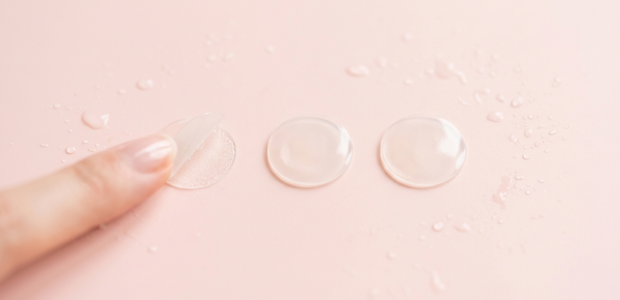
If your bathroom cabinet has started filling up with little clear stickers instead of tubes and bottles, you’re not imagining the shift. Skincare patches have quietly taken over a huge part of the spot treatment world, and for good reason. They’re fast, they’re simple, and unlike a lot of skincare, you can actually see them working.
But “patch” has become a catch all term for a few very different products that each do a different job. Acne patches, ingrown hair patches, and pore patches all look similar on the shelf, yet they’re built for different problems and work in slightly different ways. Here’s what’s actually happening under each one.
The Technology Behind Most Patches: Hydrocolloid
Before getting into the specific types, it helps to understand the material doing most of the work. The majority of skincare patches are made from hydrocolloid, a moisture absorbing material that was originally developed for wound care in medical settings, long before it ended up on TikTok.
When hydrocolloid comes into contact with fluid, like the oil, pus, or fluid inside a blemish, it forms a gel and pulls that fluid out of the skin and into the patch itself. At the same time, it creates a sealed, protective barrier over the area, which does two important things: it keeps outside dirt, bacteria, and pollutants from getting in, and it physically stops you from touching, picking, or squeezing the spot underneath. That second part matters more than people expect, since picking at a blemish is one of the most common causes of lasting scars and dark marks.
Acne Patches: Best for Surface Level Breakouts
Acne patches (sometimes called pimple patches or zit patches) are the most well known version of this technology, and they work best on blemishes that have already come to a head, meaning whiteheads and surface level pustules rather than deep, cystic acne underneath the skin.
Once applied, the patch quietly absorbs excess oil and fluid over several hours, which flattens the raised bump and calms the surrounding redness. Most people see a visible difference after wearing one overnight, though the exact timeline depends on how far along the blemish already was.
A few practical notes worth knowing:
- Apply the patch to clean, dry skin. Any leftover moisturizer or makeup will keep it from sticking properly.
- Leave it on for at least six to eight hours, or overnight, for the best results.
- If the patch turns cloudy or white, that’s a sign it’s absorbed fluid and done its job. That’s normal, not a bad reaction.
- These patches work best on smaller, surface level spots. Larger or deeper cystic breakouts usually need a different approach, and it’s worth talking to a dermatologist if those come up often.
Ingrown Hair Patches: A More Targeted Job
Ingrown hair patches use the same hydrocolloid foundation as acne patches, but they’re built for a very specific and often more irritating problem: a hair that’s curled back into the skin instead of growing out, which usually shows up as a small, inflamed, sometimes painful bump after shaving or waxing.
Because ingrown hairs tend to show up in more sensitive areas (the bikini line, underarms, or legs), these patches are often designed with a gentler adhesive and a smaller, more targeted size than a general acne patch. Some also include a small amount of salicylic acid or a similar exfoliating ingredient to help gently clear the pore and encourage the trapped hair to release on its own, in addition to the absorbing and protecting effect of the hydrocolloid itself.
Using one is straightforward: apply directly to the clean, dry bump, and leave it in place for several hours or overnight, just like an acne patch. The goal is the same reduction in swelling and redness, plus that same barrier that keeps you from picking at an area that’s often already irritated from shaving.
Pore Patches: A Different Mechanism Entirely
This is where things diverge. Pore patches, like the classic nose strip, aren’t hydrocolloid based, and they don’t work by absorbing fluid over time. Instead, they use a strong, quick drying adhesive that physically pulls debris out of the pore when the strip is peeled off, usually within ten to fifteen minutes of application.
That difference matters for how you use them. Pore patches need to be applied to slightly damp skin (the instructions usually call for this specifically), left on until they’ve fully dried and hardened, then removed in one motion rather than soaked or absorbed like an acne patch. What comes off often includes visible buildup, which is oil, dead skin, and debris that had been sitting inside the pore, not necessarily blackheads in the way people often assume.
Because they physically pull on the skin, pore patches can be a bit more intense than the gentler hydrocolloid patches, so they’re generally used occasionally rather than daily.
How to Actually Choose the Right One
With three different types on the shelf, it helps to match the patch to the actual problem rather than grabbing whatever’s labeled “skincare patch.”
- A fresh whitehead or surface level pimple: reach for an acne patch and wear it overnight.
- A small, inflamed bump after shaving or waxing: an ingrown hair patch, sized and formulated for more sensitive skin.
- Congested pores or visible buildup around the nose: a pore patch, used occasionally rather than as a daily habit.
- A deep, painful, cystic breakout: patches can help protect the area from picking, but this is usually a case where a dermatologist or a targeted treatment ingredient will do more than a patch alone.
A Quick Note on Expectations
Patches are genuinely effective at what they do, but it’s worth being realistic about what that is. They calm and flatten surface level irritation, protect the area while it heals, and stop the picking that so often turns a small blemish into a lasting mark. What they don’t do is treat the underlying cause of acne or ingrown hairs long term. Think of them as damage control for an active flare up, working alongside the rest of a skincare routine rather than replacing it.
Frequently Asked Questions
Can I wear an acne patch under makeup? Most acne patches are designed to sit smoothly under makeup, especially the very thin, nearly invisible styles. That said, wearing one overnight without makeup tends to give the best results, since it has more uninterrupted time to absorb fluid.
Are ingrown hair patches safe to use right after shaving? Generally yes, since the goal is to calm irritation, but it’s best to apply to clean, dry skin rather than immediately after shaving while the area may still be slightly irritated or damp.
Why did my pore patch not pull much out? This usually comes down to timing. If the strip is removed before it’s fully dried and hardened, it won’t grip debris effectively. It can also mean there simply wasn’t much buildup to remove that time, which is a good sign, not a failed patch.
Can I use a hydrocolloid patch on a popped pimple? Yes, and it’s actually one of the best uses for one. A hydrocolloid patch over a popped or open blemish helps absorb any remaining fluid and protects the area while it heals, which can reduce the risk of a lasting mark.