
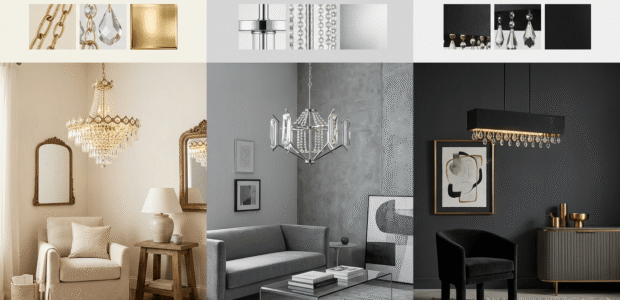
A chandelier does more than light a room. It’s one of the few fixtures people look up at, literally, which makes its finish one of the most important design decisions in the whole space. Get it right, and the chandelier feels like it was made for the room. Get it wrong, and even a beautifully designed piece can feel oddly out of place, no matter how well it’s sized or how much it sparkles.
The good news is that choosing a finish isn’t really about personal taste alone. Certain finishes have well established relationships with certain styles, color temperatures, and moods, which makes the decision a lot more straightforward once you know what each one actually signals.
Start With the Mood You Want the Room to Have
Before comparing individual finishes, it helps to name the feeling you’re going for. Warm and inviting? Sleek and contemporary? Bold and dramatic? Soft and romantic? Every finish carries a different emotional temperature, and matching that to your room’s intended mood is usually a faster path to the right choice than starting with color alone.
- Warm and elegant → gold, brass, or bronze
- Sleek and modern → chrome, polished nickel, or silver
- Bold and dramatic → matte black or blackened metal
- Soft and romantic → alabaster, warm brass, or antique finishes
- Rustic and grounded → aged bronze, oil-rubbed finishes, or wood accents
Gold and Brass: Warmth, Elegance, and a Sense of Occasion
Gold and brass finishes bring an unmistakable sense of warmth and glamour to a space. They read as elegant and inviting rather than cold or clinical, which is exactly why they’ve become such a popular choice for dining rooms, foyers, and any space meant to feel a little special.
Within the gold family, the specific finish shifts the personality quite a bit. A polished, high-shine gold or brass leans traditional and formal, the kind of finish that suits a grand entryway or a more classically styled dining room. A brushed gold finish softens that shine into something more contemporary, still warm but with a quieter, more understated sophistication. Antique brass, with its slightly darker, aged undertone, adds a sense of history and character that works beautifully in transitional or vintage-inspired spaces.
Gold and brass chandeliers generally pair best with warm color palettes, creams, warm whites, earth tones, and rich woods. They can also work in a cooler room as an intentional contrast, but that pairing takes a more deliberate hand to avoid feeling mismatched.
Chrome and Silver: Clean Lines and Contemporary Polish
If gold whispers warmth, chrome and silver speak in clean, confident lines. A polished chrome finish is highly reflective, bouncing light around a room and making the space feel brighter and more open, which is part of why it’s such a popular choice for contemporary and minimalist interiors.
Chrome tends to suit rooms with a cooler palette, blues, grays, cool whites, and modern furnishings with simple, uncluttered silhouettes. It pairs naturally with glass, marble, and other sleek materials, and it reads as fresh and current rather than ornate. For anyone building a modern or transitional space, chrome is one of the most dependable, versatile choices on the finish spectrum.
Matte Black: Bold, Grounded, and Full of Contrast
Matte black has become one of the most requested finishes in recent years, and it’s easy to see why. Against light walls, pale furniture, or an otherwise neutral room, a black chandelier creates real visual drama, drawing the eye upward and acting as a striking architectural statement rather than blending quietly into the background.
Black finishes suit industrial lofts, contemporary spaces, and eclectic interiors that lean toward bold, confident choices over softness. It’s a particularly strong option for rooms that already feel a bit safe or neutral, since a black fixture instantly adds depth and a sense of intention. Pairing it with warm wood tones or brass accents elsewhere in the room keeps the overall look from feeling too stark or cold.
Alabaster and Soft Neutral Finishes: Quiet, Diffused Elegance
For a softer, more romantic mood, alabaster and other muted neutral finishes offer something the metallic options can’t: a warm, glowing diffusion of light rather than a sharp reflective sparkle. These finishes suit bedrooms, living rooms, and any space meant to feel calm and gently lit rather than dazzling.
Alabaster pairs beautifully with soft neutrals, natural materials, and understated color palettes, making it a natural choice for anyone drawn to a quieter, more organic aesthetic rather than high shine and sparkle.
Mixing Finishes Without It Looking Accidental
You don’t need to match your chandelier’s finish to every other metal in the room, in fact, a little contrast is often what makes a space feel curated rather than matchy. The trick is intention. Pairing a black chandelier with brass cabinet hardware, or a gold fixture with chrome plumbing elsewhere in the home, can look sophisticated and layered, as long as the combination is repeated at least once or twice elsewhere in the room. A single mismatched accent can look like an error, while a finish that shows up twice reads as a deliberate design choice.
A simple rule that tends to hold up well: pick one primary finish for your main lighting and larger fixtures, then allow one, maybe two, complementary finishes to appear in smaller accents like hardware, frames, or smaller light fixtures.
A Few Practical Questions to Ask Before You Buy
- What’s the overall color temperature of the room, warm or cool tones?
- What other metal finishes are already present, in hardware, fixtures, or furniture?
- Do I want the chandelier to blend into the room’s existing palette, or stand out as a focal point?
- Is the room formal and traditional, or more relaxed and contemporary?
- Does the space get a lot of natural light, where a reflective finish like chrome will really shine, or is it more dimly lit, where a diffused finish like alabaster might feel more inviting?
Frequently Asked Questions
Is it okay to mix a gold chandelier with silver or chrome fixtures elsewhere in the room? Yes, mixed metals can look intentional and sophisticated as long as the combination feels deliberate rather than random. Repeating each finish at least once elsewhere in the room, rather than using it in just one isolated spot, helps the mix read as a considered design choice.
Which finish makes a room feel brighter? Polished, reflective finishes like chrome and polished nickel bounce more light around a space, which can make a room feel brighter and more open. Matte finishes, including matte black and alabaster, absorb more light and create a softer, more subdued glow instead.
What’s the safest chandelier finish if I’m not sure about my room’s long term style? Chrome and brushed gold tend to be the most versatile and enduring choices, since they work across a wide range of interior styles and rarely feel dated compared to more trend-driven finishes.
Does the finish affect how much the chandelier sparkles or reflects light? Yes. Polished finishes like chrome and gold amplify sparkle and reflection, especially when paired with crystal accents, while matte finishes like black or alabaster diffuse light more softly and produce a gentler glow rather than a sharp shine.