
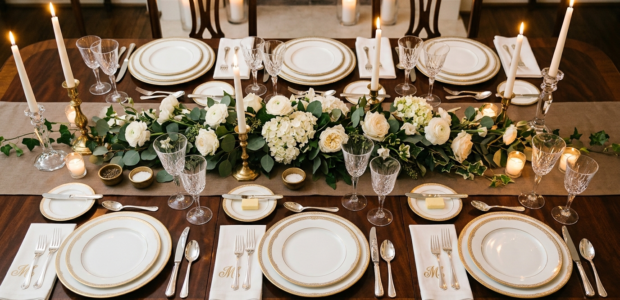
There’s a particular kind of quiet that falls over a room when a table has been set with real care. Before a single course arrives, the table itself has already said something — that this evening matters, that the people gathered around it are worth the extra attention. Setting an elegant table isn’t about rigid rules or intimidating formality. It’s a craft, and like any craft, it becomes second nature once you understand the logic behind it.
Here’s a clear, practical guide to setting a table that feels genuinely special, whether you’re hosting a milestone anniversary, a holiday gathering, or simply a dinner you want to remember.
Start With the Foundation: Your Dinnerware
Everything on the table is built around the dinnerware, so it’s worth starting there. A well-chosen set does more than hold food — it sets the tone for the entire evening. Fine bone china, with its translucent glow and refined weight in the hand, brings a level of quality that guests notice immediately, even if they couldn’t say exactly why.
When choosing pieces for a special occasion, consider the mood you’re after. A bold, richly patterned design, like a floral or gold-detailed collection, makes a striking statement and works beautifully as the visual centerpiece of the table. A cleaner, more minimalist white or neutral service offers quiet elegance and pairs effortlessly with whatever centerpiece or florals you choose. Neither approach is more “correct” than the other — the right choice depends on the occasion and the story you want the table to tell.
The Anatomy of a Proper Place Setting
This is where a lot of hosts hesitate, worried they’ll get it wrong. The good news is that once you understand the underlying logic, the layout makes intuitive sense: everything is arranged in the order it will be used, working from the outside in.
A classic formal place setting, from left to right, looks like this:
- Dinner plate sits at the center, the anchor of the setting.
- Salad or starter plate rests on top of the dinner plate, or is brought out with the first course.
- Bread plate sits just above the forks, to the upper left.
- Forks are placed to the left of the plate, salad fork on the outside, dinner fork closer in, since guests work from the outside utensil inward with each course.
- Knife sits to the right of the plate, blade turned inward, with the spoon just to its right.
- Glassware is arranged above the knife in a gentle diagonal line, typically water glass closest, with wine glasses angled outward, largest to smallest.
- Napkin is placed either on the charger, folded neatly to the left of the forks, or tucked into a napkin ring for an extra touch of polish.
If your table doesn’t have room, or your collection doesn’t include every piece listed here, that’s perfectly fine. The goal is a setting that feels intentional and complete, not one that checks every box from a formal etiquette manual.
Layering Texture and Color
An elegant table rarely relies on the dinnerware alone. Linens, glassware, and small details work together to create depth. A table runner or tablecloth in a complementary tone gives the china room to shine rather than competing with it. Cloth napkins, ideally in a fabric with a bit of weight and texture, feel noticeably more special than paper, even for a smaller gathering.
Gold or silver flatware and charger plates can echo any metallic detailing in your china pattern, tying the whole table together. If your dinnerware has a specific accent color, whether that’s a deep blue, a soft blush, or a warm gold, pulling that same tone into your napkins or candles creates a cohesive, considered look without much extra effort.
The Centerpiece: Understated Wins
It’s tempting to go big with a centerpiece, but the most elegant tables usually keep it modest. A low arrangement of flowers, greenery, or candles allows guests to see and speak to one another comfortably across the table, which matters more for the evening’s atmosphere than most people realize. Taper candles in simple holders, spaced along the table rather than clustered in one spot, add warmth without demanding attention.
If you’re using a patterned dinnerware collection, let the centerpiece play a supporting role. A few stems in a similar color palette will feel intentional, while a large, colorful arrangement can end up competing with the table rather than enhancing it.
A Few Finishing Touches That Make a Real Difference
- Place cards are a small gesture that immediately elevates a gathering, especially for a larger group. They also solve the quiet awkwardness of guests unsure where to sit.
- Lighting matters more than people expect. Warm, dimmed lighting or candlelight makes even a simple table setting feel considerably more special.
- Consistency across the table — matching glassware, coordinated napkin folds, evenly spaced place settings — reads as effortless polish, even though it takes only a few extra minutes to get right.
- Leave room to breathe. A table that feels crowded, even with beautiful pieces, loses some of its elegance. Give each setting enough space to feel considered rather than squeezed in.
It’s Ultimately About the Occasion, Not the Rules
The most important thing to remember is that there’s no single, universal version of an “elegant table.” A table set for a close family dinner can look completely different from one set to impress new colleagues, and both can be entirely correct. Etiquette gives you a helpful starting structure, but the finishing touches, your choice of pattern, color, and small personal details, are what make a table feel like it was set specifically for this occasion, for these people.
Frequently Asked Questions
Do I need a full formal place setting for every special occasion? Not necessarily. A simplified setting with a dinner plate, one or two forks, a knife, and a single wine glass can still feel elegant and considered. Save the full formal layout for occasions that genuinely call for multiple courses.
How do I choose between a patterned and a plain white dinnerware collection? Patterned pieces make a strong visual statement and work well as the centerpiece of the table’s design. Plain or minimalist pieces offer more flexibility, since they pair easily with different linens, florals, and color schemes from one occasion to the next.
What’s the most common table setting mistake to avoid? Overcrowding the table is one of the most frequent issues. Between dinnerware, glassware, and a centerpiece, it’s easy to fill every inch of space, which can make the table feel cluttered rather than elegant. Leaving breathing room around each setting almost always improves the overall look.
Is fine bone china practical for everyday use, or only special occasions? Modern bone china is often more durable than people assume, and many collections are dishwasher and microwave safe. That said, reserving a special set specifically for milestone occasions can make those moments feel more distinct and memorable.