
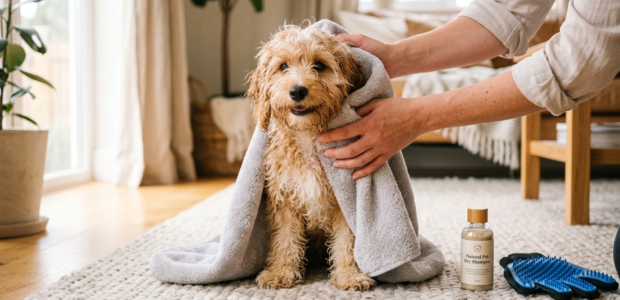
There’s a particular kind of dog smell that creeps up on you. One day your pup smells like your pup, and the next, you’re wondering how something so small managed to roll in every unpleasant thing your backyard has to offer. Full baths do the heavy lifting, but most vets recommend spacing them out every four to six weeks or so, which leaves a real gap where things can get, well, fragrant.
The good news is you don’t need a full tub session every time your dog starts smelling a little rough. A handful of simple habits, done between baths, can keep your dog looking clean, smelling pleasant, and feeling comfortable without overdoing the actual washing, which can dry out their skin if it happens too often.
Why Bathing Too Often Can Backfire
It seems logical that more baths equal a cleaner, better smelling dog, but it’s actually the opposite. Frequent bathing strips away a dog’s natural skin oils, which signals their glands to produce even more oil to compensate. That extra oil ends up attracting more dirt and bacteria, which can leave your dog smelling worse, not better, shortly after a bath.
This is exactly why between bath care matters so much. It lets you manage dirt, oil, and odor without disrupting your dog’s skin barrier the way frequent full washes can.
Dry Shampoo: The Quick Refresh
A good foaming dry shampoo is probably the single most useful tool for keeping your dog fresh between real baths. Unlike a full bath, dry shampoo is formulated to cleanse and deodorize without any rinsing required, which makes it perfect for a quick refresh after a muddy walk or before guests come over.
Massage it into your dog’s coat, focusing on the areas that tend to get dirtiest or hold the most odor, then towel off any excess. It won’t replace a proper bath entirely, but paired with regular brushing, it can genuinely stretch the time between full washes while keeping your dog smelling clean in the meantime.
Brushing Does More Than You’d Think
Regular brushing is one of the simplest, most underrated tools for keeping a dog fresh. It loosens and removes dirt, dander, and loose hair before they have a chance to build up and start smelling, and it also helps spread your dog’s natural oils evenly across their coat, which keeps things looking shinier and healthier overall.
Aim for a few times a week for most coat types, more often for dogs with longer or thicker fur. It takes just a few minutes and prevents a lot of the buildup that leads to that classic doggy smell in the first place.
Microfiber Towels and Gloves Are More Useful Than People Realize
A quality microfiber towel isn’t just for after bath time. Keeping one by the door and giving your dog a quick wipe down after walks, especially on wet or muddy days, removes a surprising amount of dirt and moisture before it ever makes it onto your furniture or floors. Microfiber is particularly good at this since it absorbs far more than a regular towel while being gentle on your dog’s coat and skin.
Microfiber grooming gloves are worth keeping in the same routine. A quick pass with a glove after a walk or a trip to the yard picks up loose dirt and hair while doubling as a light massage, which most dogs genuinely enjoy, making it an easy habit to build rather than a chore either of you dreads.
Don’t Forget the Eyes and Ears
Coat freshness gets most of the attention, but eye and ear care matters just as much for keeping your dog comfortable and clean between baths. Gentle eye wipes can remove the buildup and discharge that tends to collect in the corners of a dog’s eyes, which is especially common in certain breeds, without irritating sensitive skin.
Ear wipes serve a similar purpose, helping clear away dirt, wax, and debris that build up in the outer ear. Keeping this area clean isn’t just about smell, it’s also a simple way to catch early signs of irritation or infection before they become a bigger issue. A quick check and wipe once or twice a week is usually enough to keep things in good shape.
A Few More Habits Worth Building In
- Wash bedding, blankets, and toys regularly. These items absorb a surprising amount of oil and odor over time, and a freshly cleaned dog can start smelling off again quickly if they’re lying on a bed that hasn’t been washed in weeks.
- Clean collars and leashes too. These get worn daily and pick up dirt and bacteria just like your dog’s coat does. Tossing them in a mesh laundry bag makes this an easy monthly habit.
- Keep up with dental care. Bad breath is a common contributor to that overall “dog smell,” and regular tooth brushing, along with dental checkups, goes a long way toward keeping things fresh from the inside out.
- Watch for changes. A sudden shift in smell, especially something sour or yeasty, can sometimes point to a skin issue or infection rather than ordinary dirt. If a smell doesn’t respond to your usual routine, it’s worth a check with your vet.
Frequently Asked Questions
How often should I use dry shampoo on my dog? This depends on your dog’s activity level and coat type, but many dogs do well with dry shampoo used every week or two between full baths. Dogs who spend a lot of time outdoors or have a stronger natural odor may benefit from more frequent touch ups.
Is it bad for a dog to go too long between baths? Going a bit longer between baths is generally fine and often better for their skin, as long as you’re keeping up with brushing and spot cleaning in between. If your dog’s coat starts looking visibly dirty or their skin seems irritated, that’s usually a sign a proper bath is due.
Why does my dog still smell right after a bath? This is surprisingly common and usually comes down to overwashing, which strips natural oils and triggers extra oil production as a result. Spacing out full baths and relying on dry shampoo and wipes in between often solves this over time.
Are human wipes or dry shampoo safe to use on dogs? No, it’s best to stick with products made specifically for dogs. Human grooming products can contain ingredients that irritate a dog’s skin or aren’t safe if ingested during grooming or licking.