
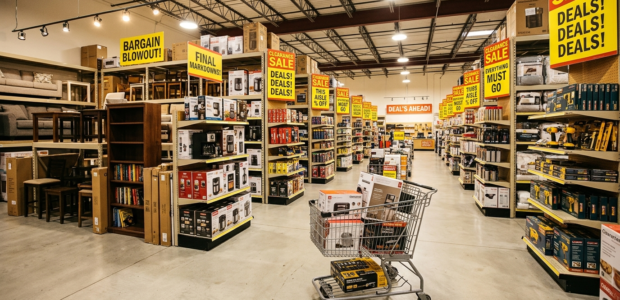
Every year around January, the internet fills up with the same advice: buy mattresses in February, wait for July for furniture, hold off on appliances until the holidays. It’s solid advice if you’re shopping at a regular retailer that prices things around a predictable sales calendar.
But if you shop somewhere like Bargain Junkie, that calendar works a little differently. Deep discount retailers buy up closeout inventory, overstock, and liquidation stock whenever it becomes available, not on a fixed seasonal schedule. That means some of the “wait until X month” rules still apply, and some of them don’t matter nearly as much. Here’s a real, practical breakdown of both.
Why the Traditional Sales Calendar Exists in the First Place
Most retailers follow a predictable rhythm. New furniture styles roll out in February and August, so last season’s pieces get marked down to clear floor space. Appliance manufacturers release new models in the fall, pushing older ones onto clearance racks. Patio furniture and grills get cheap in September once summer demand drops off. It’s less about generosity and more about inventory management.
Stores that source through overstock, refurbished, and closeout channels, like Bargain Junkie, operate outside that rhythm. Instead of waiting for a manufacturer’s release calendar, they buy inventory whenever a retailer needs to offload it fast, whether that’s a bankruptcy sale, an overproduction run, or a distributor clearing warehouse space. Which means the “best month” to buy might really just be “whenever it lands in stock.”
Still, knowing the traditional calendar is useful, because it tells you when demand (and therefore competition for good stock) tends to spike or dip.
Winter (January and February)
January is historically one of the strongest months for home goods. Retailers are clearing out holiday inventory and last year’s furniture and bedding lines to make room for new arrivals, which is why you’ll see steep markdowns on linens, storage bins, and living room furniture during this stretch.
February brings appliance deals as manufacturers start rolling out new models, along with the usual Presidents Day mattress and furniture promotions. If you’ve been eyeing a couch, a bed frame, or new bedding, this is traditionally a strong window.
What this means for overstock shoppers: this is one of the few times of year where the traditional calendar and the closeout calendar tend to line up, since so many retailers are dumping inventory at once. It’s a good season to check in regularly.
Spring (March through May)
Spring shifts the focus outdoors. Gardening tools, patio furniture, and grills start appearing at better prices as stores anticipate summer demand, and vacuum cleaners tend to see discounts in April for reasons no one has ever fully explained. Memorial Day weekend toward the end of May is also one of the more reliable sales events of the year, especially for appliances and mattresses.
What this means for overstock shoppers: spring is when a lot of seasonal overproduction shows up in closeout inventory. If a manufacturer overestimated demand for patio sets or outdoor tools the previous year, this is often when that surplus gets liquidated, sometimes well before the traditional summer sale season even starts.
Summer (June through August)
June through August is prime season for tools, kitchen appliances, and back to school gear. Independence Day sales bring markdowns on furniture, and by August, summer clothing and outdoor items go into end of season clearance as stores prepare for fall.
What this means for overstock shoppers: this is arguably where a deep discount retailer has the biggest advantage over waiting for a traditional sale. Because summer clearance often means retailers are trying to offload huge quantities of seasonal stock fast, that inventory frequently ends up moving through liquidation and overstock channels at a fraction of the original price, well before the “official” clearance sales even start on the shelf.
Fall (September through November)
September is when patio furniture, grills, and lawn equipment get marked way down as summer inventory clears out. October is a quieter month overall, though older appliance models start dropping in price as new ones arrive. Then November hits, and electronics take center stage as Black Friday sales ramp up, often rivaling or beating the December holiday discounts that follow.
What this means for overstock shoppers: fall is a good time to watch for large furniture and appliance lots, since this is peak season for stores clearing floor models and discontinued lines. It’s also worth checking clearance sections more often in the weeks leading into the holidays, since a lot of surplus inventory changes hands during this window.
Winter Again (December)
December rounds things out with deals on tools, small appliances, and electronics as retailers try to capture last minute holiday spending, followed by a second wave of markdowns once Boxing Day and post holiday clearance hits.
What this means for overstock shoppers: the days right after the holidays are worth paying attention to. A lot of unsold holiday inventory gets liquidated quickly in early January, which is often when it shows up in overstock and clearance channels at its lowest price of the year.
The Real Advantage of Shopping Overstock and Closeout Retailers
The seasonal calendar above is a useful guide, but it’s built around how full price retailers manage their shelves. A store built around overstock, refurbished, and liquidation inventory isn’t tied to that same rhythm. Instead of one predictable markdown window a year, new deals can show up whenever a distributor needs to move product, which is why it’s worth checking in regularly rather than waiting for a specific month.
A few practical habits that tend to pay off:
- Check the clearance section more than once a month, since new liquidation lots can appear without warning.
- Don’t wait for a specific holiday sale if you spot a good deal on something you actually need. Overstock inventory doesn’t always come back.
- Keep an open mind on brands. A lot of closeout inventory comes from name brand overproduction or a retailer going out of business, not from lower quality goods.
- If you’re shopping for something big, like furniture or a major appliance, compare the overstock price against the traditional seasonal low. Often the overstock price beats it by a wide margin, even outside the “best” month to buy.
Frequently Asked Questions
Is it ever a bad idea to buy something outside its traditional sale season? Not necessarily. Traditional sale seasons exist because full price retailers manage inventory on a predictable schedule. Overstock and closeout retailers don’t follow that same schedule, so a good deal can show up at any point in the year.
What categories tend to have the deepest overstock discounts? Furniture, home decor, and seasonal items like patio furniture and tools tend to see the steepest markdowns, largely because they take up the most shelf and warehouse space when a retailer needs to clear inventory fast.
Should I still pay attention to the traditional sales calendar? It’s still useful as a general guide, especially for knowing when demand tends to spike. But treat it as a rough guideline rather than a rule, since a genuinely good deal doesn’t always wait for the “right” month.
How often should I check for new deals? Since overstock inventory changes based on availability rather than a fixed schedule, checking in every couple of weeks (rather than waiting for one big seasonal sale) tends to turn up the best finds.